Modern, Contemporary, Abstract, Young — So What Exactly Are We Talking About?

Modern, Contemporary, Abstract, Young — So What Exactly Are We Talking About?
Before we start talking about how to look at art, I’d like to clear up a few terms that are often used interchangeably.
Because Modern Art, Contemporary Art, Abstract Art, and “Young Art” actually describe quite different things.
Modern Art
When art historians talk about Modern Art, they are referring primarily to a particular period in the history of art — roughly from the late 19th century to the middle of the 20th century, although the boundaries are not completely fixed.
It was a time of enormous change.
Artists increasingly moved away from the question:
“How can I paint the world as realistically as possible?”
and began asking very different questions:
“Do I actually have to represent the world the way we see it?”
This was the time of Impressionism, Expressionism, Cubism, Dada, Surrealism, and many different forms of abstraction.
Picasso, Kandinsky, and Malevich all belong to this world.
A good example is Pablo Picasso.
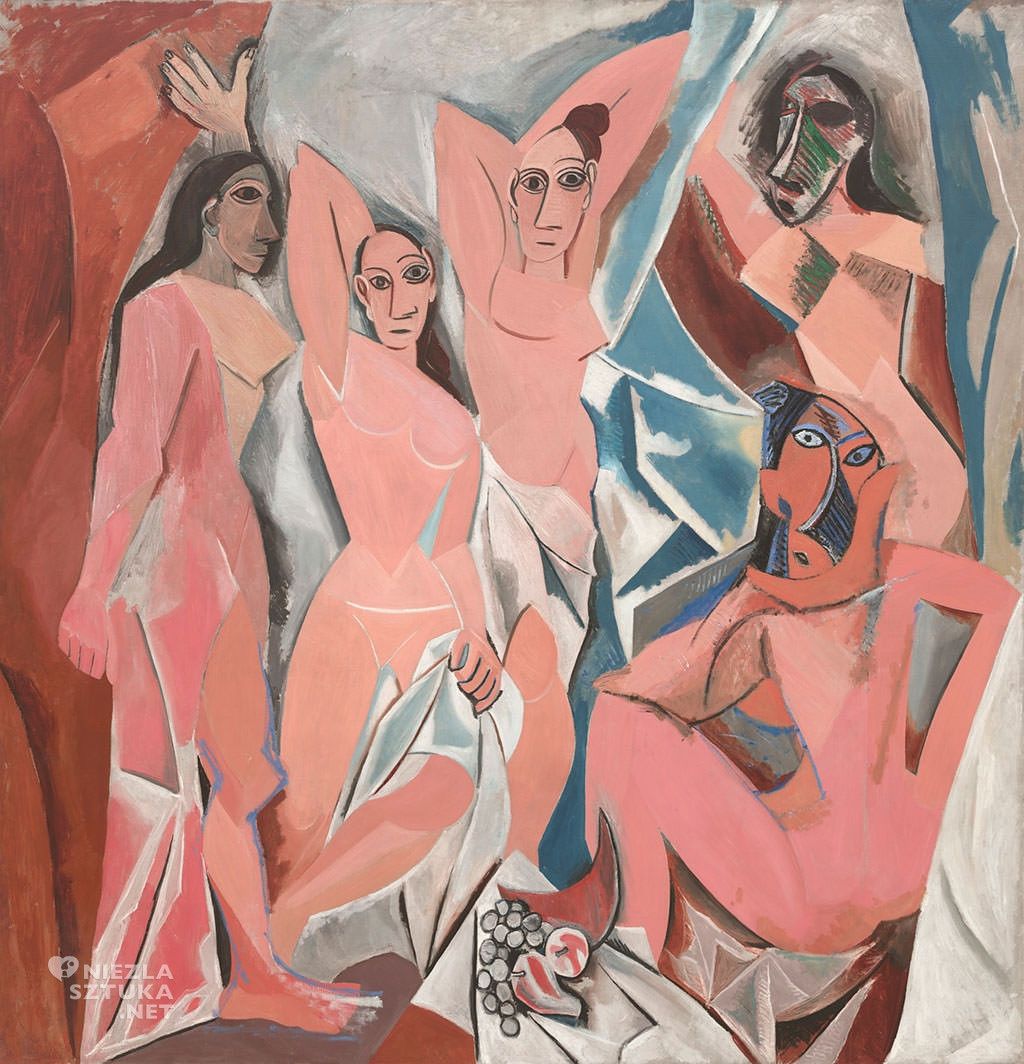
When we look at his Les Demoiselles d’Avignon, we can still recognize people and certain objects. But reality has been radically transformed. Picasso was no longer simply trying to paint what the eye sees.
And this is important:
“Modern” does not simply mean “new.”
Wassily Kandinsky went even further, gradually building his paintings through lines, colors, shapes, and forms, with less and less reliance on recognizable objects.
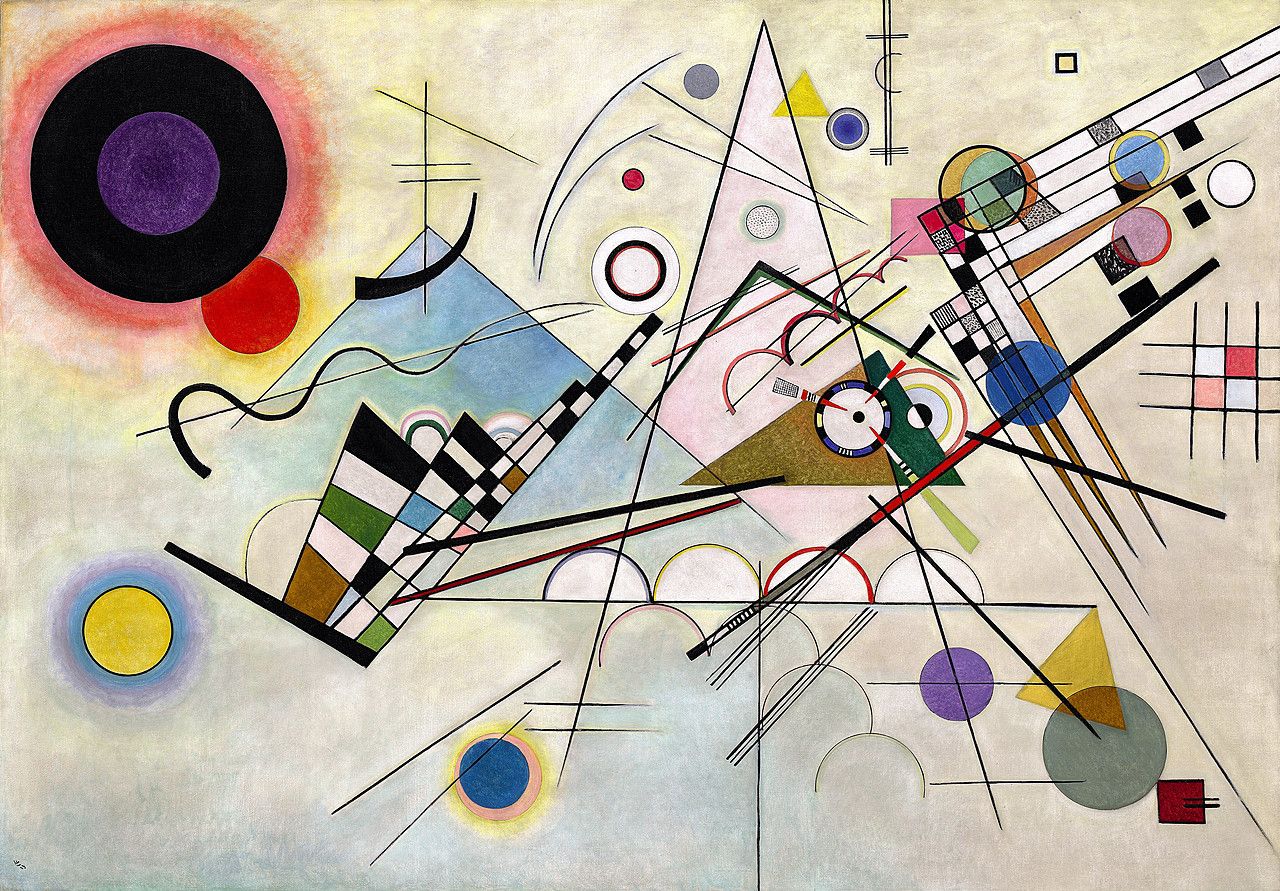
And this brings us to abstraction.
Abstract Art
Abstraction is not an era.
It does not refer to one particular moment in history. It is, rather, a way of creating and constructing a work of art.
Simply put, abstract art does not have to depict something we can easily recognize.
We do not necessarily need to see a person, a house, a tree, or a landscape.
A painting can be built from:
-
colors,
-
lines,
-
shapes,
-
geometric forms,
-
textures,
-
rhythms,
-
empty space.
But abstraction can look very different from one artist to another.
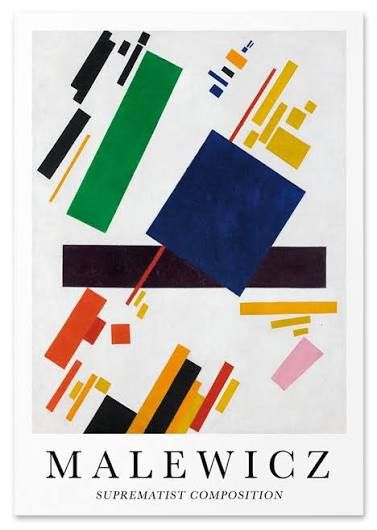
It can be highly geometric, as in the work of Kazimir Malevich.
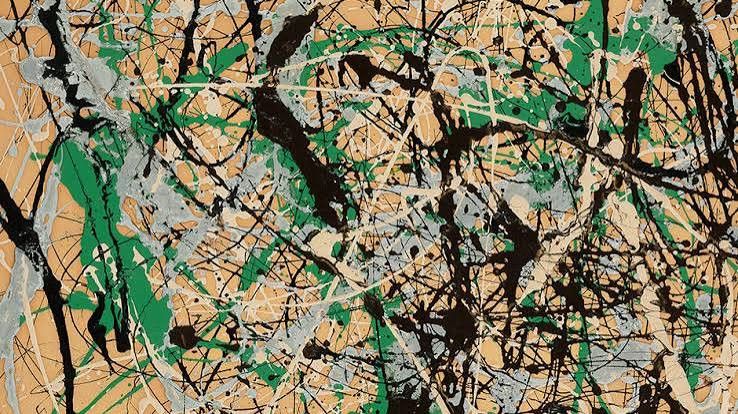
It can be full of energy and gesture, as in the work of Jackson Pollock.
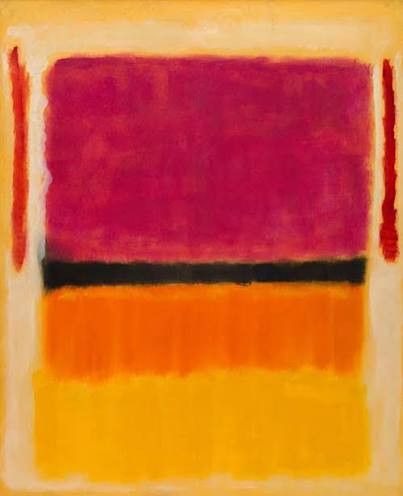
Or it can be quiet and subtle, built around delicate relationships between colors, as in many works by Mark Rothko.
And this is why the word “abstract” alone does not tell us very much about a painting.
Just as the word “music” does not tell us whether we are about to hear jazz, classical music, or rock.
Does abstract art have to be modern?
No.
And this is one of the things worth remembering.
Abstract art can belong both to Modern Art and to Contemporary Art.
The word “abstract” tells us something about how the work is constructed.
Whereas “modern” or “contemporary” tells us primarily about its place in time and art history.
Contemporary Art
Modern Art and Contemporary Art are not the same thing.
In English, the distinction is especially clear:
Modern Art — a historical period.
Contemporary Art — art much closer to our own time.
Contemporary art is an enormous and very diverse field.
It can, of course, include painting.
But it can also include:
-
photography,
-
sculpture,
-
installation,
-
film,
-
performance,
-
digital art,
-
sound,
-
objects,
-
and sometimes works that are difficult to place in a single category.
And most importantly:
Contemporary Art does not have to be abstract.
It can depict a person very realistically.
It can tell a specific story.
It can be colorful or almost completely monochromatic.
It can be beautiful, unsettling, playful, personal, or extremely minimal.
So when we see a contemporary painting, we should not immediately assume:
“It must be abstract.”
It might not be.
Contemporary Art is not a synonym for Abstract Art.
And what about “Young Art”?
That is something else again.
“Young Art” is not an artistic style.
There is no single way that “Young Art” has to look.
The term is usually used to describe the work of younger artists — particularly in the context of galleries, art fairs, competitions, and the art market.
A young artist might paint abstract art.
But they might just as well create realistic portraits, sculptures, photographs, installations, or digital art.
So:
a young artist does not necessarily create a “young style.”
They might be a young person working with very traditional methods.
And the opposite is also true — an older artist can create work that feels very contemporary in its language and approach.
The simplest way to remember it:
MODERN → a historical period
ABSTRACT → a way of constructing a work
CONTEMPORARY → art of our time
YOUNG → a term related to the artist’s generation
And these categories can overlap.
For example, we can have:
contemporary abstract painting by a young artist.
That is why it is useful to keep these terms separate.
And where does Generative Art fit in?
That is yet another way of thinking about how a work is created.
In generative art, the artist creates a system, set of rules, or algorithm that contributes to producing the final result.
The outcome can be abstract, figurative, digital, or take many other forms.
So “generative” tells us primarily something about how the work was created — not what it looks like.
And once we know what we are looking at, we can move on to a much more interesting question:
How do we actually look at it?
That will be the subject of the next post.
------------
Thank you for being here and for supporting my work on Patreon. Your support allows me to keep developing, learning, and growing as an artist and as someone who works closely with art.
At the same time, I want to turn everything I learn along the way into something useful for you - carefully selected, condensed posts where I can share my knowledge about art, different ways of looking at it, and the questions that help us understand it a little better.
I hope this series will become a place where we can explore art together - without unnecessary theory, pressure, or the feeling that there is only one “right” way to look at a work.
Thank you for being part of it.
 Voo Voo Lay

Trwa ładowanie...